
Honorable. Beautiful. Ours.
One hundred years at UCLA.
From the first pledge class in 1926 to today, the story of Alpha Iota is the story of the women who shaped it.
A Local Becomes a Legacy
In early 1925, a group of women at the University of California, Southern Branch (the campus on Vermont Avenue that would one day become UCLA) founded a local society called Kappa Psi Zeta. They rented and furnished their own house at 926 N Miraposa Street, still finding its own identity, quickly made a name for themselves.
That fall, those five Kappa Deltas already wearing the badge transferred in: Annette Lewis, Sarah Bethune, and Eleanor Robinson of Theta Sigma, Margaret Monks of Rho, and Virginia Higgins of Phi. Together with Kappa Psi Zeta, they petitioned Kappa Delta National. Zeta Province President Walda Rusch came to visit. Then came the letter, from National Chapterian Ada McDonnell Smith, inviting them to work toward a place in the sisterhood.
Nine months of striving followed, guided by Katherine Wright, president of the Los Angeles Alumnae Association, and the five transfer members who had staked their names on the local's promise. On August 8, 1926, the telegram arrived: Kappa Delta had granted a charter.
Twenty-five young women gathered at the house on September 30 for their first-degree initiation, led by Ada McDonnell Smith herself. The next day brought the second degree; the third was held before a packed house at the Philanthropy and Civics Club. On October 2, 1926, Alpha Iota was formally installed, with Zeta Province President Donna Everett Williams presiding alongside Smith and Wright. Twenty-five women walked in as pledges. They walked out as Alpha Iota's charter class.
The Charter Class of 1926
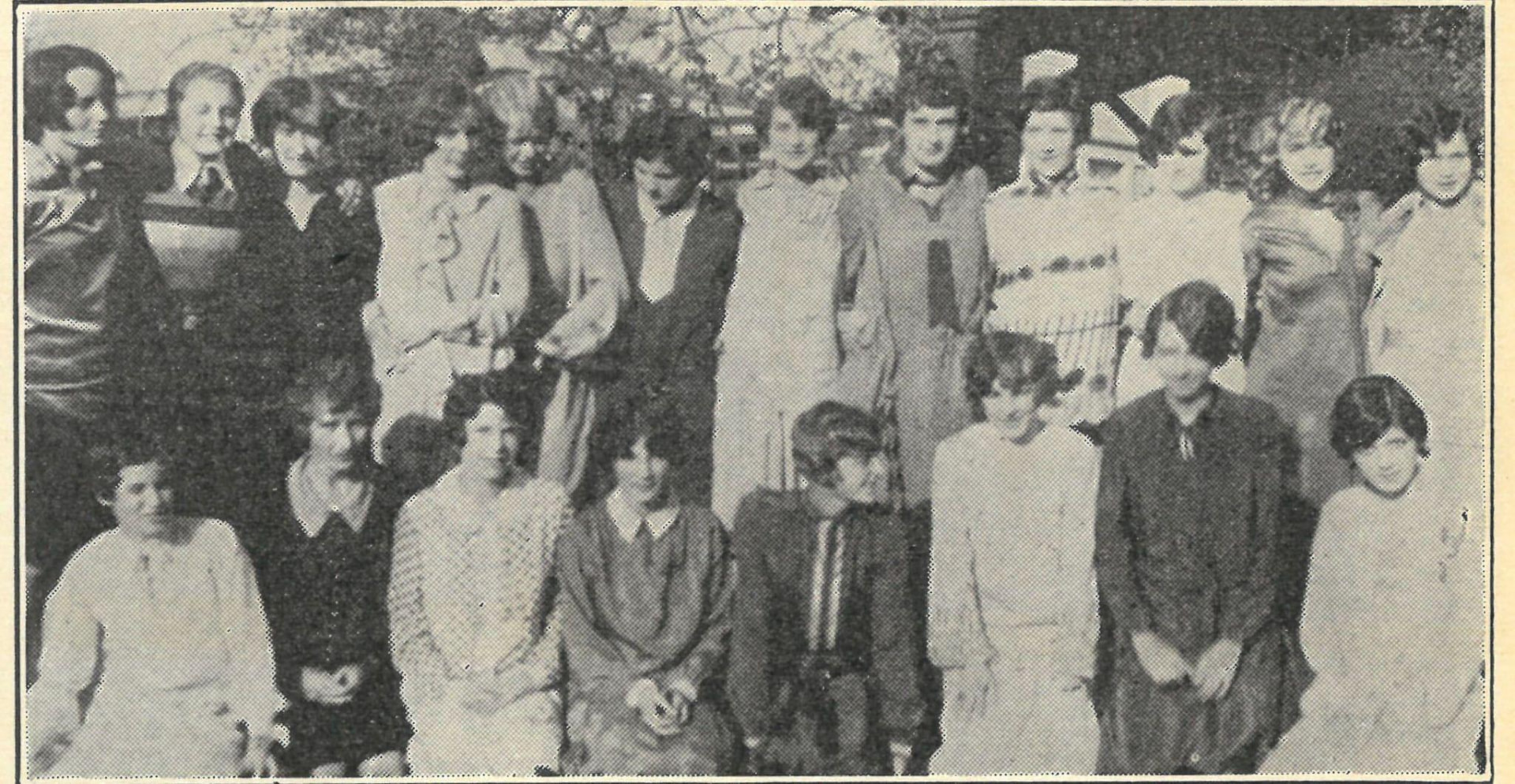
The charter class of Alpha Iota, initiated October 2, 1926.
Dora Druce · Margaret Thornton · Helen Plummer · Wordna Pyle · Elva Evans · Marion Volney · Evelyn Wigman · Helen Butterworth · Winifred Calkins · Bertha Reeder · Augusta Gudmunsen · Betty Mason · Catherine Edmeades · Margaret E. Richardson · Elizabeth Cameron · Frances Hodges · Neenah Sue Wood · Helen May Mulvin · Helen Naomi Lynd · Margaret Jean Goodyear · Adelene Blythe Greene · Mary Louise Roach · Leota Faye Henry · Barbara E. Schilling · Wanda I. Schwartz
A Home on the Row
When UCLA relocated to Westwood, Alpha Iota moved with it. By January 1930 the chapter was having meetings at the KD house located at 1016 Tiverton Street. Then, in March 1930 the chapter met at 308 S. Doheny Dr. in Beverly Hills. On March 24, 1930, for a group barely four years old: it built its own house, on a corner lot they bought for $9,750 at what is now 800 Hilgard and built it for an additional $40,000, which was financed and furnished by the chapter itself. The style was strictly Italian, in keeping with the Mediterranean architecture the university required of every house on the Row, and it sat on a rise with the mountains visible in the distance.
Inside, a wrought-iron staircase wound up from the reception hall past a tapestry-hung landing. To one side, a library in red and yellow opened onto the patio; to the other, a living room nearly the length of the house, done in green and gold, with a baby grand piano and a fireplace flanked by tall candelabra. The dining room held massive Italian-style furniture; the grill downstairs let members eat breakfast perched on stools, coffee-shop style. Upstairs, ten bedrooms and a ten-bed sleeping porch housed twenty women, with lockers, a laundry room, and one heroically large communal bathroom. The patio, ringed by an arched piazza, filled with ferns and California flowers. On October 5, 1931, Alpha Iota threw open its doors for a formal Open House, and Kappa Deltas from across Southern California came to see what a young chapter had built.
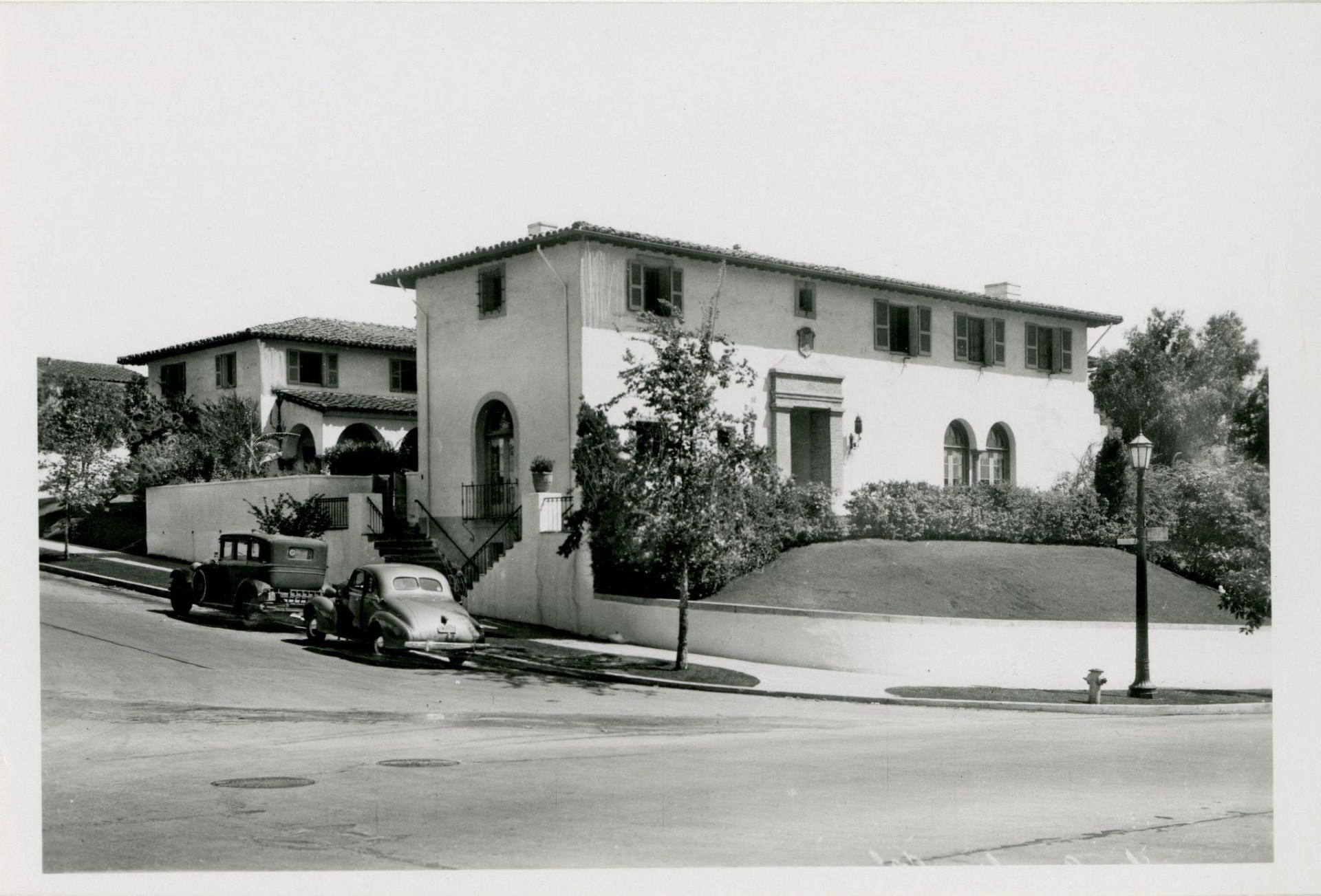
The chapter house at 800 Hilgard Avenue, built 1930.
The Decades In Between
The years that followed were not gentle ones. Alpha Iota lived through the Depression of the 1930s and the Second World War, when campuses nationwide watched enrollment thin as young men left for service. It grew alongside UCLA itself, from a young satellite campus into one of the largest public universities in the country, and weathered the cultural upheavals of the 1960s and '70s that remade Greek life nationwide.
The Night of the Fire
On December 3, 1987, the chapter had just finished its sisterhood pizza night, a quarterly tradition held the week before finals. By 9:15 that evening, most members were at the campus library. An electrical overload, likely from overloaded extension cords, sparked a fire on the second floor. No one was in the room when it started. Two members trapped in a back bedroom escaped through a window, sliding down a garden hose thrown up from the yard below.
No one was seriously hurt. The damage was not so lucky: nearly the entire second floor, with smoke and water reaching further still, totaling roughly $300,000, covered by Kappa Delta's national insurance. The chapter was homeless days before finals.
The Row answered immediately. Kappa Kappa Gamma took members in within hours. Most of the chapter spent finals week and the winter quarter living at the Phi Mu house; others moved into university apartments. Professors extended deadlines and waived finals. The chapter finished the quarter with a 3.0 GPA, second highest on the Row. In January, National President Corre Stegall visited to see for herself what her chapter had done. Alpha Iota closed out the year with a party it called Red Alert, and came back to Hilgard Avenue stronger than it left.
Restored to Its Roots
In 2009 the chapter asked the house corporation for a study space on the main floor. Board member Emily Payne Veletzos, then restoring her own 1930s home, suspected the wall to wall carpet was hiding original hardwood, and she was right. Four years of work followed, culminating in the summer of 2013 with a restoration of the full 25,000 square foot house. The aim was not to modernize it but to return it to the California Mission design it opened with. Working from the original 1930 blueprints, designer Georgia Caparis rebuilt the living room fireplace's tapered overmantel, lost to an earlier remodel, and set a carved limestone mantel beneath it. The collegians chose what went above: the Kappa Delta crest, hand painted, just as the 1930 drawings had it. Chapter President Bailey Headrick was the first member to arrive on move in day, and she cried when she saw it.
A Legacy of Recognition
The values Kappa Delta was founded on in 1897, confidence, character, service, have carried through Alpha Iota for a century, worn in the white rose and the nautilus shell, and lived out in a standing commitment to Kappa Delta's national philanthropic partners, Prevent Child Abuse America and Girl Scouts of the USA. That commitment shows up in the record below: decades of Chapter Advisory Board and Scholarship honors, from a Scholarship Award in 1947 to Academic Excellence in 2023.
A Hundred Years In
Alpha Iota has outlasted the Vermont Avenue campus it was born on, outlasted the Depression and two world conflicts, outlasted a fire that took its own house, and outlasted a 2020 pandemic that emptied that house and moved chapter meetings onto screens before members came back to Hilgard Avenue once again. It has outlasted every doubt about whether a chapter founded on a fledgling campus would still matter a century later.
It does. A hundred years in, the house on the Row still takes in new members every fall, still asks them to become confident, capable women, and still trusts that a chapter is only as strong as the women willing to carry it forward. Alpha Iota's centennial is not the end of that story. It is one more initiation into it.